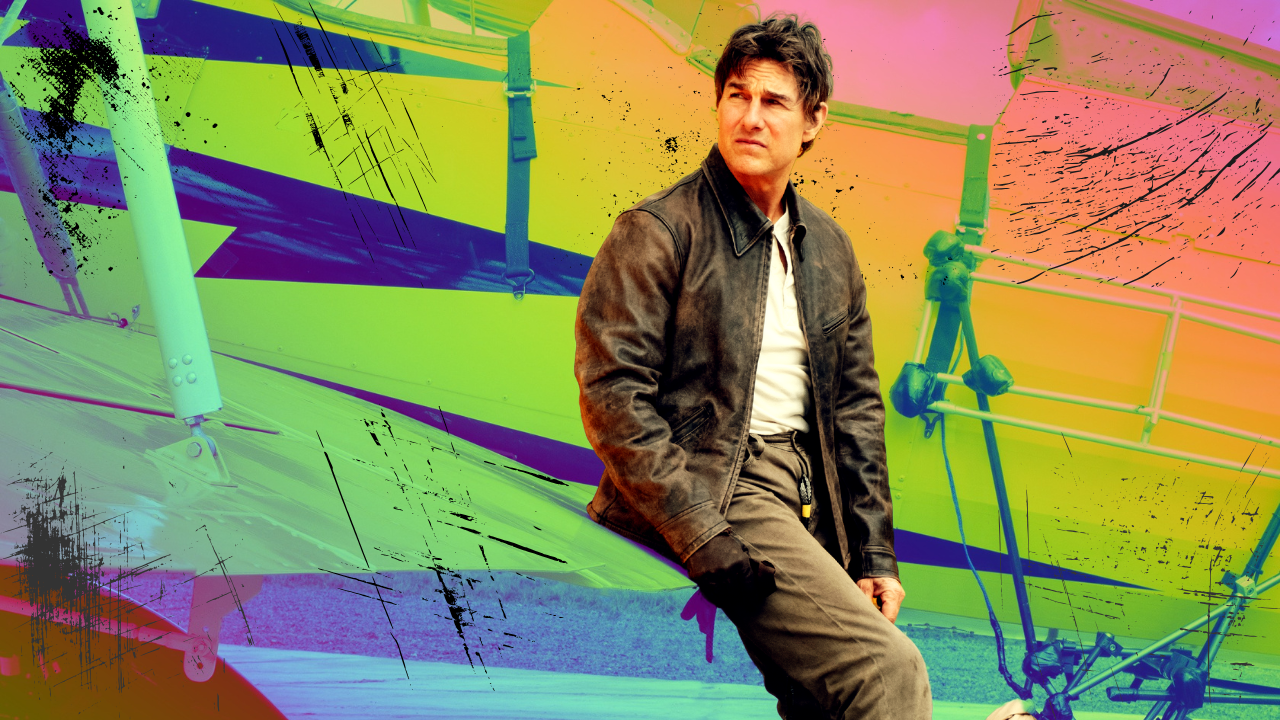
With an estimated $400 million budget, globe-trotting action sequences, an ensemble of familiar faces, and a three-hour runtime meant to bring loose conclusion to an ever-expanding eight-film series, Mission: Impossible — The Final Reckoning is, by no small measure, a big movie. Probably one of the biggest ever made. This is meant to be an immense cinematic exercise, designed to be experienced on the largest screens available.
What I found most intriguing about this cinematic send-off, which I saw with a packed auditorium on the best, loudest screen in town, were the smaller, gentler, quieter moments. In a movie conceived in the macro, it’s the micro moments that resonated most. Sure, Tom Cruise and company take your breath away when the A-list actor jumps from plane to plane in the deep blue desert sky. You’ll likely be gripped when he’s thousands of miles below the sea’s surface in a James Cameron-esque ocean odyssey within a sunken Russian missile. And it wouldn’t be a movie in Cruise Control without seeing the cinema star execute his signature sprint across the world’s largest silver screens. But these are merely a few notable action scenes in a film that is often curiously, sometimes frustratingly, focused more on character than big stunts.
The Final Reckoning is packed to the brim, but not with the death-defying action set pieces that filled earlier installments like Dead Reckoning and Fallout. It is, rather, a morose and mournful sequel where the fate of the world remains constantly at stake, but instead of hearing chatter about the planet’s potentially doomed state uttered between leaps and punches, we absorb the weight of its impending doom. This is a film that is, if you can pardon the pun, reckoning with what a future without cinema might look like. It’s not simply trying to figure out if this is the last time we’ll see Ethan Hunt—it’s assessing whether an AI-hungry industry will allow the next Tom Cruise to make missions deemed impossible.
In that respect, I’m not sure it entirely works. It’s a movie burdened by its own self-imposed gravitas. Where so many other Mission: Impossible films can be flighty and fast-paced, even as stakes grow larger, this one wants to sit and contemplate. It contains extensive exposition, copious doomsday speak, numerous callbacks to other films in the series (including abundant flashbacks), and lengthy discussions about the seemingly holy quality of Mr. Hunt—i.e., Mr. Cruise, a man who can simply do no wrong, is always good, eternally trustworthy and respectable, and also quite handsome and loving.
In other words, The Final Reckoning is a long sit, and it’s pretentious. But in one respect, it’s earned this indulgence. As the producer and star at the forefront of these ever-shifting films—ones that have handed their director chairs to multiple auteurs and tracked Hollywood’s changing trends over the past 30 years—Tom Cruise has been using the Mission: Impossible movies to tell the story of Tom Cruise himself. While multiple chefs have worked in this series’ kitchen, and writer-director Christopher McQuarrie has provided steady guidance for these last four installments, Cruise ultimately authors this constantly growing franchise. He transformed a snappy TV series into the defining action franchise of the blockbuster era. There’s no Mission: Impossible without him.
So yes, much like previous Mission: Impossible movies and 2022’s Top Gun: Maverick, this new Mission: Impossible is a love letter to Tom Cruise, for Tom Cruise, by Tom Cruise. Despite all this multi-million dollar navel-gazing, though, he’s not solely at the helm. This is a team mission, and perhaps more than any previous film in the series, The Final Reckoning feels like the star is ready to pass the baton to the next generation… sort of.
Make no mistake: this is Tom Cruise’s movie. He is the looming face that wearily glares from the poster. He’s the one performing death-defying stunts, submerging himself into the ocean’s deepest and darkest depths or flying hundreds of miles through the air. And he’s the one constantly delivering lip service about friendship, teamwork, and doing what’s right for the common good. But amid all the franchise fawning, doomsday rhetoric, and Cruise doing his thing, The Final Reckoning often shines in the small moments, particularly with characters you’d least expect to stand out. Movies this massive don’t typically make you think about the minimal, but with the eighth Mission: Impossible, it does, ironically.
Particularly early on, when the movie is admittedly at its messiest, The Final Reckoning charms by playing to your long-standing admiration of established characters, namely Ving Rhames’ Luther Stickell and Simon Pegg’s Benji Dunn. There’s a desire in their first few scenes to keep things grounded, clearly striving for casual honesty and the budding humanity of these sometimes stock characters. With Luther seen sick and feeble but still quick with a smile and crackling jokes, we understand that the old ways are dying, but you can always go out with grace. While Cruise, as producer and star, appears unwilling to commit fully to the firm finality of his on-screen avatar, the lives of other characters remain constantly uncertain.
When we see some of them die, or seem on the verge of death, there’s an emotionally fraught tenderness that’s more touching and palpable than your average heavy-duty blockbuster. Mission: Impossible hasn’t always been a character-forward franchise; it’s safe to assume you’ll remember the stunts before the character beats. However, in these recent installments, it recognizes there’s good reason why certain faces have become familiar over previous films. As we’ve watched them weather age, time, and impossible missions, we feel the intensity of their presence and, eventually, the starkness of their absence. Much like the characters at its core, The Final Reckoning is a more mature and self-reflective blockbuster than previous additions to the series—and for good reason.
Much like Dead Reckoning (previously Part 1), The Final Reckoning is a modern blockbuster where stars of the past reckon with cinema’s future—if there is a future in cinema. With AI’s increasing advent and the looming nature of a world where familiar faces can no longer be trusted, Cruise and company use their considerable film powers to remind people of spectacle’s power—real, honest spectacle performed by real, living people rather than ones and zeroes. Is that enough? I don’t know, but I appreciate their determination.
But as film’s fate, particularly in a post-pandemic world, seems increasingly uncertain (and not the kind Cruise frequently flies high in these massive movies), and the future of everything teeters on complete collapse—socially, politically, economically, environmentally—there’s a somber, subdued, conflicted tone here that, like previous movies, proves to be a reflection of its time in cinematic history.
With finer emphasis on the U.S. government, particularly through a compelling conflicted Angela Bassett as President Erika Sloane, we receive a greater picture of the stakes at play and the dangers accompanying Hunt’s nearly reckless ambition. We don’t necessarily lose faith in our perpetual do-gooder; we’ve seen him defy odds too many times to count him out. But similar to Dead Reckoning, The Final Reckoning again channels the Cold War paranoia energy of Brian De Palma’s original hit. That sense of intrigue and looming paranoia accompanying an uncertain tomorrow returns vengefully in these last two films. While I felt Dead Reckoning achieved this without sacrificing entertainment value, at least The Final Reckoning knows how to convey the weight of these drastic world-altering actions.
Henry Czerny, returning to his role as Agent Eugene Kittridge, has been the smooth voice of possible doom since the series’ inception. Bringing him back in the two Reckoning films effectively and commandingly reminds us how time has passed, where we’ve been, and what that means for Ethan’s uncertain future. These are the people who know him best, who know when to trust him and that he will deliver. To see doubt, concern, fear, or persistent dread in their voices and eyes communicates the potentially impending tragedy of a mission that may be too impossible far better than any dialogue could.
But if we’re tying this back to the 1996 original, I’d be remiss not to mention Rolf Saxon’s return as William Donloe. When Saxon’s return for this giant send-off was announced, one could reasonably assume it would be some sort of cutesy, Marvel-esque fan service. One would assume, or at least hope, that McQuarrie and crew are above such easy pandering, but it’s undeniable that Avengers: Endgame provides at least partial influence. But it doesn’t take long to see that Saxon’s reprisal of Donloe is no mere masturbatory fun. The character proves surprisingly fleshed-out, thoughtful, and rewardingly integral to the movie. While fans might have been more excited about Cruise’s undersea endeavors, I’ll admit that some of The Final Reckoning‘s most enthralling moments came from realizing, with great joy, that McQuarrie, Cruise, and crew would expand this punchline of a supporting character into a grizzled but vital part of this newly-assembled ensemble. Saxon is, in my view, the MVP of this monumentally huge film, and few franchises would give him such endearing treatment.
For whatever faults and complaints I have with this final Mission: Impossible movie, I’ll admit it’s among the select few franchise closers that know how to organically honor their legacy and properly respect fans. The stunts are marvelous, and stakes remain high. But it’s ultimately about making us feel that time spent was rewarded. Cruise has spent the media tour for these movies praising everyone from studio heads to theater employees serving concessions. It’s gratifying to know that same spirit extends to these characters. As much as this is a series about Tom Cruise, it’s the team that ultimately makes it all possible.