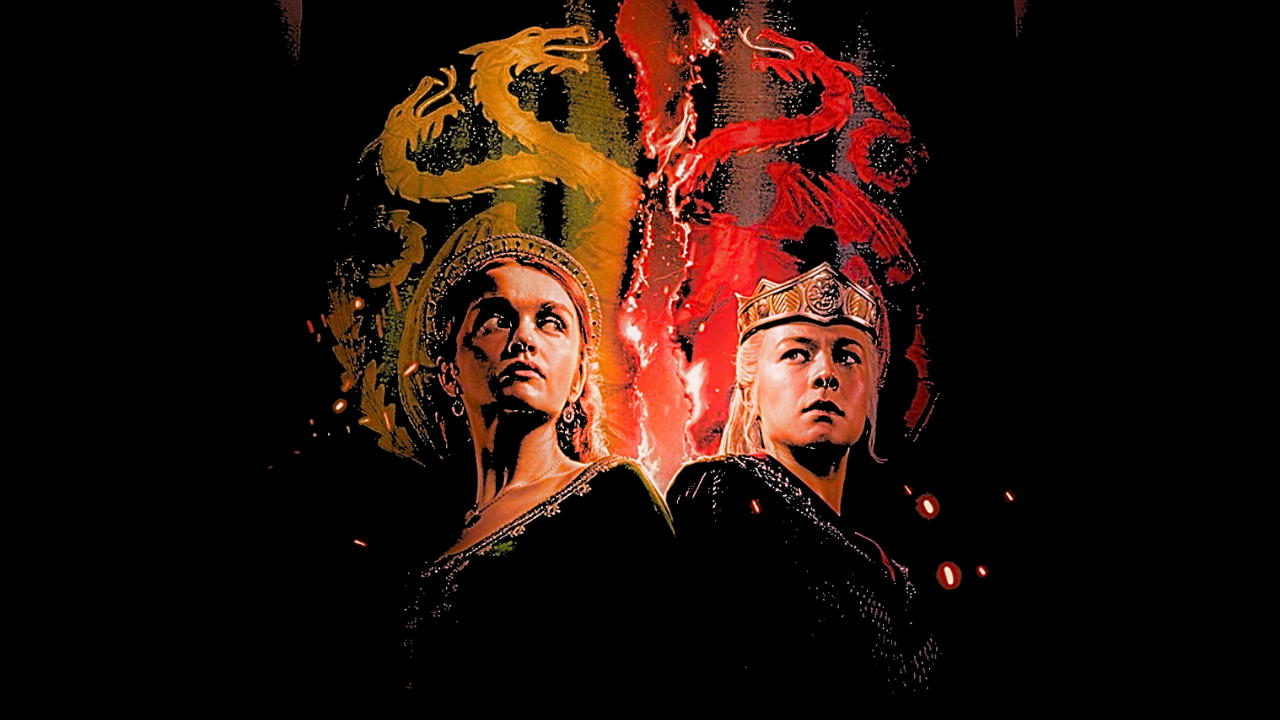
Let it be said now and mayhaps forevermore that House of the Dragon and its Game of Thrones predecessor continue to be plagued by the same unforced errors that have also negatively impacted George R.R. Martin’s A Song of Ice and Fire series — of which the shows are based on. And that is delayed gratification, the promise and buildup to something, only to be delayed and delayed and delayed yet again, to the point where even the most ardent fans of this fantasy world, myself very much included, have to wonder if the lack of resolution must needs be the point. That’s the reigning theory, anyway.
(You can listen to my thoughts on the first season of House of the Dragon here).
As you may have gathered by now…
House of the Dragon Season 2 ends on a disappointedly anti-climactic note. And to be excessively clear I don’t put any of the blame on show runner Ryan Condal for the same reason I refuse to give Martin any gruff for how long Winds of Winter is taking. Ultimately, success is too often the killer of art, and when it comes to HBO’s corporate overlords slicing Season 2’s hopefully inevitably satisfying final two episodes, I’ll leave it to the actual insiders to litigate all that drama. Let’s stick to the fantasy drama, for now.
Out of the wider context, House of the Dragon Season 2 is a remarkable achievement for what it happens to be when you remove the baggage. It still boasts a big budget and earns its money on the screen, while still successfully shifting its narrative structure (as it had to) from the time-skip-happy first season to the more contemporary, war-storied saga akin to Game of Thrones.
Its main advantage as a series…
Continues to be the fact that it is decisively NOT Game of Thrones and thrives as a result. For example, the show isn’t dragged down by audience expectation to make characters like Tyrion more “likable” because he’s a fan favorite, thus eroding what made the character so compelling on the page. House of the Dragon, by contrast, leans into the complex and constantly shifting morality of its main players at their worst, with few exception.
Yes, House of the Dragon still very much appears biased toward the side of the “Blacks,” the Targaryen coalition headed by Rhaenyra (played by Emma D’Arcy, who continues to stealthily fuel this show with its largest share of pure charisma). But that decision is certainly preferable to an egregious “both sides-ing” of these warring factions, which would otherwise force the writers to de-fang the villains we love to hate, such as Aemond One-Eye (Ewan Mitchell) and Ser Criston (Fabien Frankel, who caps off his role this season with a delightfully melancholy tilt toward nihilism).
After recently re-reading Fire and Blood…
It’s exceptionally clear to me that Condal enjoys the text for the same reasons I do. That he’s far more interested in the dueling shades of history than the accurate depiction of it. Yes, his show gives canonically weight to certain events that the book can only provide various theories toward, as its an in-world history text that mirrors the incomplete and often incorrect history of our own world. Condal has his name-day cake and eats it too, however, by allowing for that gray area to persist in key places, particularly when it comes to Daemond Targaryen (Matt Smith, who was practically born to play a Targaryen).
Many a Redditor will continue to speculate about Daemond’s final vision and what it means for the larger universe of these shows and books. Is House of the Dragon still a prequel? Is it really more of a spin-off? Condal appears to enjoy living in the happy middle, allowing House of the Dragon room to be its own show while still retroactively reclaiming the pop culture mantel that Game of Thrones fumbled in its last hours.
I’m still of the mind that…
Only Martin’s final two books, assuming they ever see the light of summer, will be able to provide that closure fans so desperately crave. Or perhaps an epilogue series down the line that at least attempts to yada yada the ending to history’s most successful television show of all time. Thankfully, House of the Dragon doesn’t need to do either, even if it’s clearly setting up a packed third season that finishes what Season 2 promised to start.
But again, the lack of resolution is unfortunately a theme when it comes to Westeros. That unsettling feeling that victory is a hollow thing in the real world, mostly due to the toll it extracts. And as many people might have guessed from the way things play out in Game of Thrones, “if you think this has a happy ending, you haven’t been paying attention.”